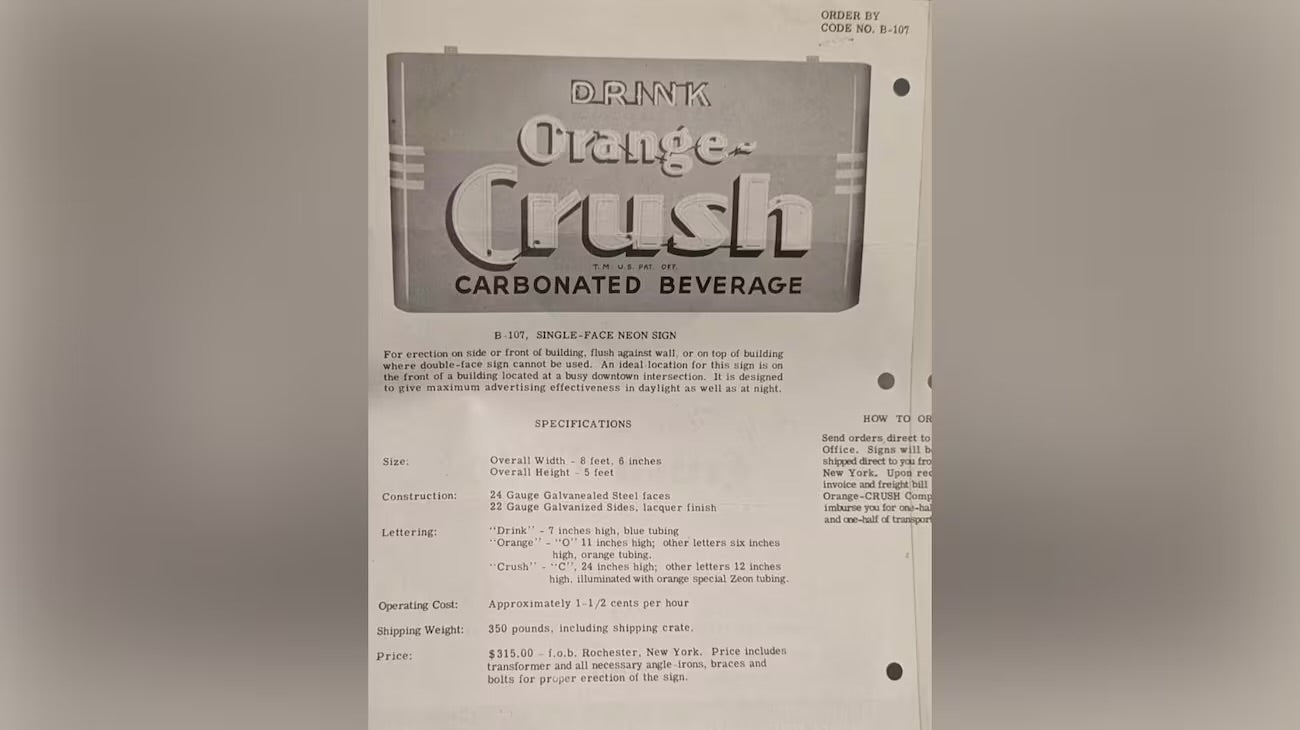

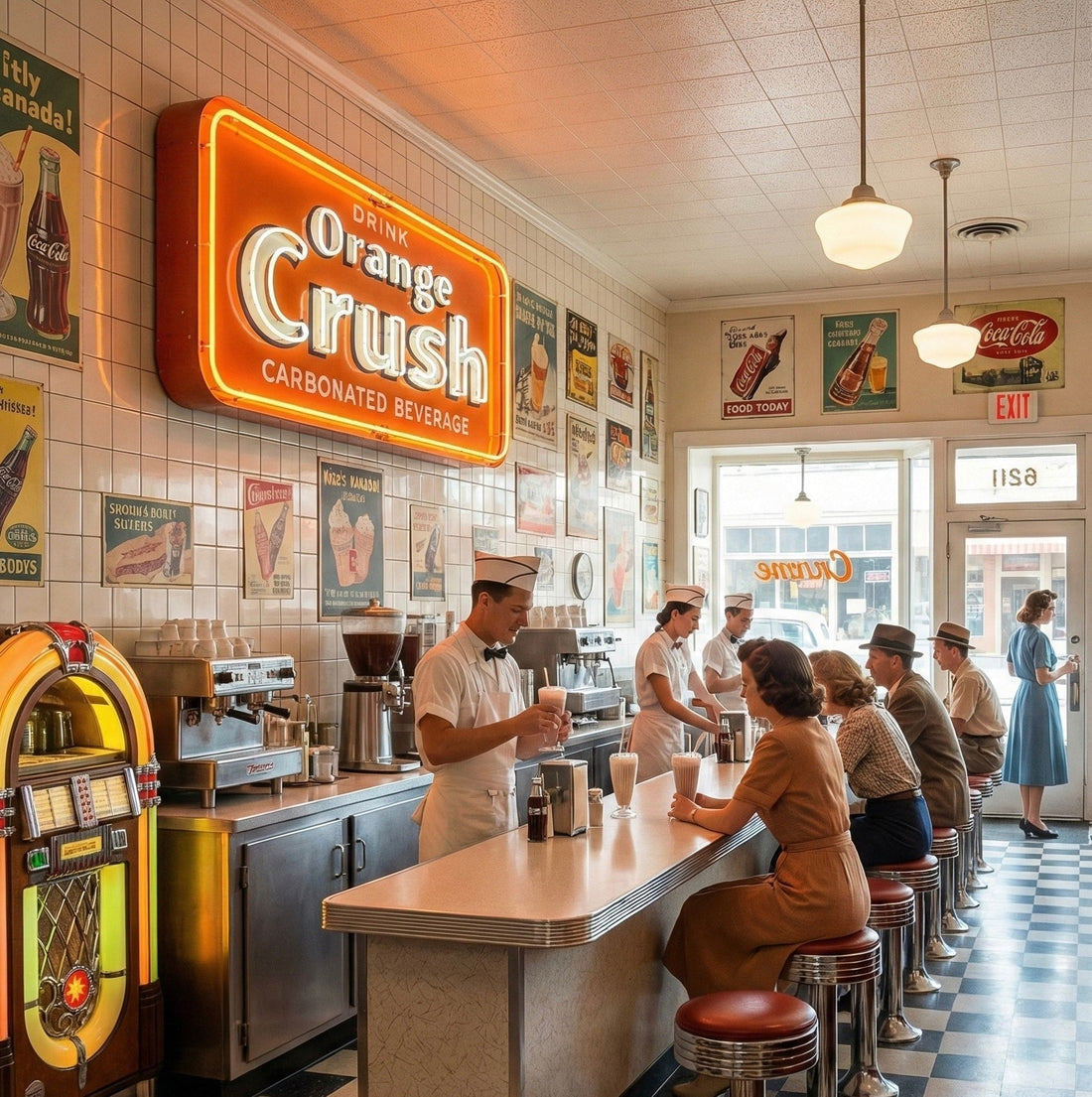
From soda fountains to neon-lit diners, Orange Crush became one of America’s most recognizable citrus brands. Discover its history, vintage signage, and why collectors still love it today.
Long before soda aisles were crowded with energy drinks and artificial flavors, Orange Crush stood out for one simple reason: it actually tasted like oranges.
Introduced during an era when soft drinks were still experimenting with flavor and identity, Orange Crush became one of the first nationally successful fruit-flavored sodas in the United States. Its vivid color, bold citrus flavor, and unmistakable branding made it a standout on soda fountains, roadside stands, and eventually grocery store shelves across America.
Today, Orange Crush is more than a drink—it’s a visual and cultural icon, especially in the world of vintage advertising and collectible signage.
The Origins of Orange Crush
Orange Crush was created in 1911 by beverage chemist Neil C. Ward, who developed a formula using real orange pulp—something uncommon at the time. Unlike earlier orange-flavored drinks that relied on extracts or syrups, Orange Crush marketed itself as being closer to the real thing.
The name “Crush” was meant to evoke the idea of freshly crushed oranges, reinforcing the brand’s emphasis on freshness and authenticity.
By 1916, Orange Crush had begun franchising its formula to bottlers nationwide, setting the stage for rapid expansion throughout the 1920s and 1930s.
A Soda for the Soda Fountain Era
Drugstores, lunch counters, and roadside diners poured Orange Crush into tall glasses packed with ice, often topped with foam or a slice of orange. The drink’s bright orange color immediately caught the eye—especially when displayed behind polished counters and chrome fixtures.
This visual appeal made Orange Crush a natural fit for bold advertising.
The Branding That Made Orange Crush Unforgettable
Orange Crush’s advertising leaned heavily into brightness, optimism, and fun—a perfect match for mid-century America.
Signature Design Elements
- Bright orange backgrounds
- Green leaf accents symbolizing fresh fruit
- Heavy block lettering that was easy to read from a distance
- Clean, cheerful layouts meant to feel modern and upbeat
These elements translated exceptionally well to porcelain enamel signs, window decals, paper posters, and later neon signage.
Unlike darker, industrial brands, Orange Crush signage practically glowed—even when unlit.
Orange Crush Porcelain Signs: Why Collectors Love Them
Original Orange Crush porcelain signs are now highly sought after by collectors of soda, gas station, and roadside Americana.
What makes them desirable:
- Vivid color retention – Orange pigments age beautifully in porcelain enamel
- Strong contrast – Orange, green, and white remain visually striking decades later
- Universal nostalgia – Even non-collectors instantly recognize the brand
- Cross-collectibility – Appeals to soda collectors, diner decorators, and Route 66 enthusiasts alike
Route 66, Road Trips, and Orange Crush
Crush became part of the American road trip experience, especially in Roadside Americana Along Route 66
Travelers stopping at diners, gas stations, and roadside cafés often encountered Orange Crush signage glowing in windows or painted on exterior walls.
For many Americans, the brand became associated with:
- Summer vacations
- Family road trips
- Small-town main streets
- A slower, more personal era of travel
That emotional connection is a big reason Orange Crush memorabilia continues to resonate today.
Why Orange Crush Still Matters Today
More than a century after its creation, Orange Crush remains relevant—not just as a beverage, but as a symbol of 1950’s Retro Soda Shop signs.
In a world of minimalist logos and digital advertising, Orange Crush represents a time when brands weren’t afraid to be bold, colorful, and joyful.
For collectors and purists, authentic neon porcelain signs aren’t just decorative—they’re reminders of:
- Real ingredients
- Handcrafted advertising
- A uniquely American design language
Final Thoughts
Orange Crush didn’t just sell soda—it sold sunshine in a bottle.
From its early commitment to real orange flavor to its unmistakable advertising, the brand earned its place in American history. And today, its signs, logos, and colors remain just as powerful as they were a century ago.
For anyone drawn to vintage advertising, Orange Crush is a reminder of when branding was built to last—and designed to make people smile.